
Identify the exact editions, understand price labels and compare delivered costs before treating a language gap as a saving.
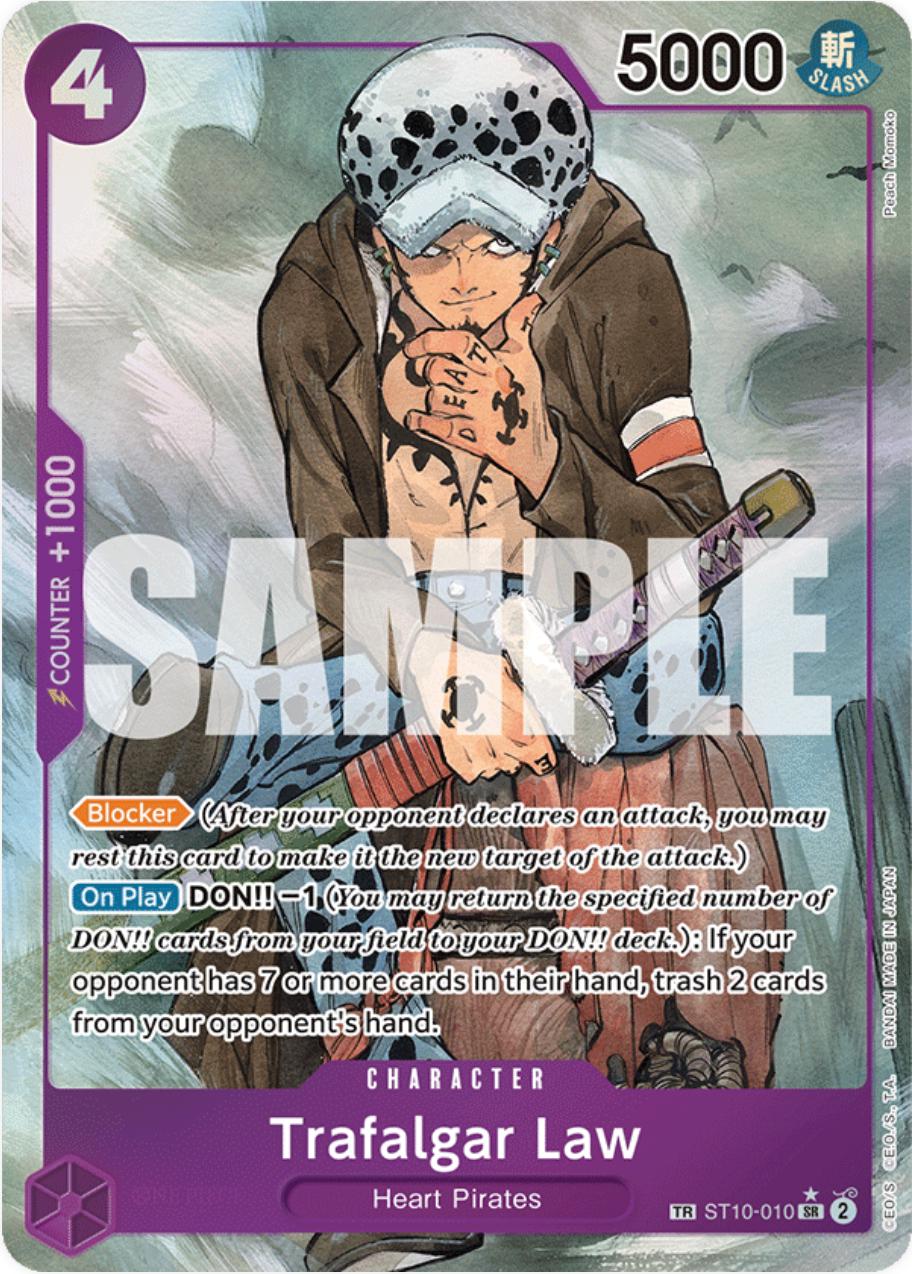
A collector searching for Trafalgar Law ST10-010 can reach more than one kind of object. The number helps identify the card, but a purchase also depends on language, illustration, treatment and version. That becomes especially important when a search result places an English price beside a Japanese one. Before calculating the difference, establish what each price actually describes.
An earlier version of this article presented an 87% English/Japanese gap as a verified comparison. That claim has been withdrawn. The retained editorial record does not establish the exact counterpart for every pair or substantiate the claim that every displayed price was a completed sale. The useful question remains: how should a collector compare language editions without buying the wrong printing?
Start with the object you want
There are two different shopping decisions hidden inside a language comparison. One collector wants a particular illustration and is happy with either language. Another wants an English edition to complete a set. The Japanese card might satisfy the first person and be irrelevant to the second, however attractive its price looks.
Write the requirement before opening the price chart. Include character, collector number, set, language and the visible version you intend to buy. Add any stamp, prize designation or special finish that matters to the collection. This makes it possible to reject an unsuitable listing without trying to justify it as a bargain.
The Trafalgar Law Treasure Rare catalogue page is a starting point for one specific record from the old comparison. It is not proof that another product carrying ST10-010 is its Japanese equivalent. The corresponding product needs its own identity evidence and photographs.
A matching number is only the first check
The same number can remain attached to different illustrated versions. A concrete example appears in the Limitless ST21-015 full-art record and its prize-card record. Both identify Roronoa Zoro, while the records distinguish the versions and attribute them to different illustrators. A search by number alone therefore leaves an important decision unresolved.
An exact comparison should connect two explicit records, then check their images and descriptions. A shared character name is weaker evidence than a shared number, and neither settles edition or treatment. Even a matching illustration leaves open differences in language, stamps and distribution version.
Keep uncertain pairs outside a price ranking. A spectacular percentage cannot repair missing identification. Nor does removing the largest differences make the remaining pairs reliable: a wrong match can produce an ordinary-looking price difference too. Identification has to happen independently of whether the arithmetic looks plausible.
Decide what the price field means
A seller's asking price describes an offer. A completed-sale record describes a reported transaction. A catalogue reference value summarizes information according to its provider's method. These can all help a collector, but they answer different questions and should carry different labels.
PriceCharting's explanation of its price data describes combining sold listings through an algorithm. A resulting reference figure is therefore not automatically the amount a buyer can pay for an available copy. For a particular card, inspect the relevant product history and the underlying listings where available.
Put the observation date next to the value in your notes. Then record currency, condition and whether the card is graded. A comparison between an ungraded catalogue reference and a particular graded listing needs more explanation than a currency conversion. If condition cannot be aligned, describe the prices separately instead of presenting a clean saving.
Name the denominator
Consider a deliberately hypothetical pair of verified editions: one costs $100 and the other $60 before delivery. The cheaper edition is 40% below the $100 reference. The expensive edition is approximately 66.7% above the $60 reference. Both calculations describe the same $40 difference, using different starting values.
That is why a headline saying only “a 40% gap” can be hard to interpret. State which edition is the reference and which direction the calculation takes. Retain the actual amounts so readers can reconstruct the result. Avoid mixing discounts and premiums in one ranking without telling readers that the denominator changes.
These example amounts are teaching figures, not current Law prices or an estimate of what a collector should pay. They demonstrate the calculation after identity has been resolved. The original article reversed that order by making the percentage the attraction before the supporting pair evidence was secure.
Compare the delivered purchase
For someone keeping the card, the relevant amount is the cost of receiving the desired copy. Add the quoted delivery charge and any other applicable charges shown for that transaction. Use the exchange rate actually available through the intended payment route, recording its date rather than assuming an undated conversion.
Request photographs when the listing leaves a collection requirement unclear. A picture can help establish artwork or a visible stamp, although it may not settle every surface or condition question. A seller's generic image should not be treated as inspection of the copy that will arrive.
Resale introduces another separate calculation: what a buyer would pay for that language and version, less the costs of selling it. The reference price of the English edition does not establish a resale price for a Japanese copy. Keeping those two objects distinct prevents a collecting alternative from turning into an unsupported profit claim.
Keep a comparison you can revisit
Save the two product URLs, the relevant listing links, observation times and the reason you consider the pair comparable. Include photographs or source references in private notes where permitted. If a listing disappears, the record should still explain what was compared and which details remained uncertain.
Other entries in the original table, including Uta Championship 2023 and Portgas.D.Ace Championship 2023, require the same discipline. Their presence in an old table does not independently validate a counterpart. No current cross-language discount is asserted here for those records.
A successful comparison ends with a clear purchase choice: the exact edition wanted, an acceptable copy and a supported delivered price. Sometimes the Japanese edition will meet that brief. Sometimes language is part of the collection and the alternative will not. Either conclusion is more useful than a large percentage attached to an uncertain pair.
Correction, September 14, 2026: the previous 87% headline, aggregate comparison and unverified pair table were removed. This article now explains the identification and pricing checks needed before making that comparison.

